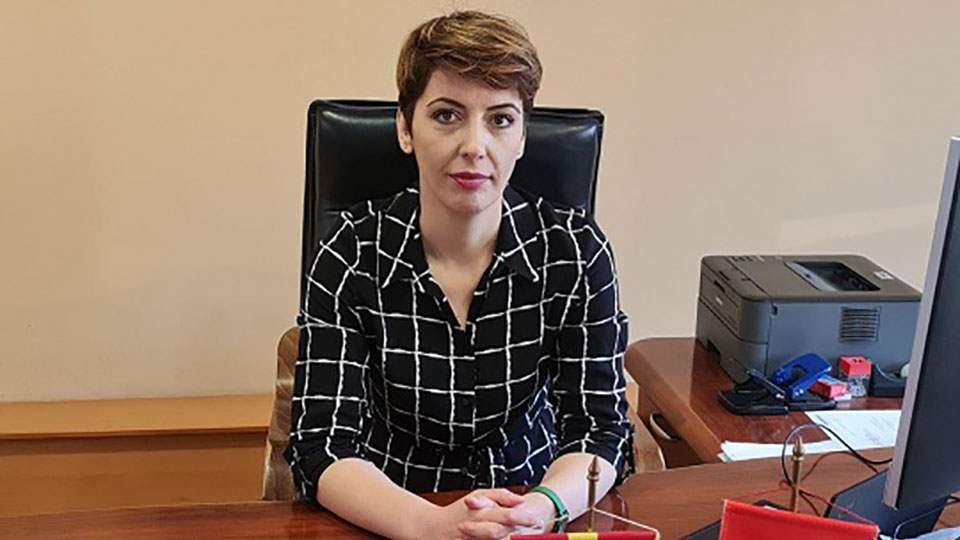
Interview with the Director General of the HIFRNM
The implementation of the preventive targets was halted on the basis of the Decision declaring a state of crisis due to Covid-19, the validity of which ended on 30.06.2022. To date, no such new Decision has been adopted. Taking all this into account, the Fund has no basis for abolishing the preventive targets
The HIFRNM is already working on introducing its own integrated electronic system, which will directly connect the information systems of health institutions in real time, thereby improving efficiency in operations, data exchange and control over them, in relation to the provision of health services at the expense of the Fund, and with a view to optimising the available budget funds according to the real needs and purposes of health institutions
Madam, we are conducting this discussion at a difficult time (a time of pandemic and economic crisis). Could you tell us what the most acute problems were that you faced after taking office?
First of all, I would like to thank you for the opportunity to discuss several issues that are of interest to both doctors and patients, that is, insured persons.
Bearing in mind that the HIFRNM has a very large number of responsibilities of particular importance for all social segments, we face various challenges on a daily basis.
Over the past few months, we have worked intensively in several areas of health insurance, in terms of dealing with various challenges.
Namely, given that I assumed this position towards the end of April this year, and that work had already been under way for some time on a reform in primary health care, this reform naturally attracted considerable attention from me.
In addition, alongside this issue, part of the focus was directed towards the application of strengthened control mechanisms for invoices for medicines dispensed at the expense of the Fund in pharmacies, on which intensive work has been carried out for months.
The continuing challenge for the Fund related to the financial implications cannot but be emphasised, as a result of the increase in the price of electricity, as well as the consequences of the global Covid crisis, which during 2020 and 2021 placed enormous pressure on the work of health institutions and health workers, and thus indirectly on the Fund as well.
What is the financial condition of the Fund?
The Fund is in a stable financial condition and regularly and promptly makes payments for its obligations to all contracted entities.
What are the priorities in the work plan for the next 2023 year, in the context of the Health Insurance Fund - health institutions?
The HIFRNM, as a purchaser of health services based on the principles of comprehensiveness, solidarity and equality, ensures the quality and timely provision of reimbursements for exercised rights of the Fund’s insured persons and payments for health services for which it concludes contracts with health institutions.
The focus of the HIFRNM’s strategic objectives for 2023 will be directed towards finding additional models and mechanisms through processes of reorganisation and appropriate motivation of human resources and, at the same time, optimal use of material resources, with a view to ensuring higher quality of the services that health institutions provide to patients, that is, to insured persons.
There are remarks regarding the functioning of the system in connection with the exercise of citizens’ rights in the area of prescriptions, the list of medicines, sick leave and similar matters. In what direction is the Fund’s engagement aimed at overcoming these problems?
As regards the model and system of functioning of the Fund, we have had no remarks so far, except in the direction of improving the already established system functionalities for which the Fund is responsible.
The HIFRNM is already working on introducing its own integrated electronic system, which will directly connect the information systems of health institutions in real time, thereby improving efficiency in operations, data exchange and control over them, in relation to the provision of health services at the expense of the Fund, and with a view to optimising the available budget funds according to the real needs and purposes of health institutions. In this way, the Fund’s introduced electronic prescription will enable, among other things, access to information in real time between the Fund and health institutions in the part concerning the creation and fulfilment of prescriptions in e-format for medicines at the expense of the Fund.
As regards the procedure for updating the so-called “Positive List of Medicines”, in accordance with the legal regulations, the Fund is working intensively with the Ministry of Health, which is competent for adopting the necessary legal acts for the practical implementation of such a reform.
Regarding payments for sick leave, I can say that they are being made on an ongoing basis, without delay, according to the appropriate dynamics for processing complete requests, and the funds for sick leave are paid in the same way. This means that a problem with payment delays may possibly arise in the event of incomplete documentation on the part of the family doctor or the employer.
In your opinion, is the citizens’ view justified: “why do I need health insurance when I have to pay for everything privately anyway”, if analyses also show that even before the Covid crisis citizens paid privately for a large part of health services, and a large part of medicines are not on the positive list, which has not been renewed for years (nor more seriously reviewed, renewed, updated and similar)?
With the funds that the Fund’s insured persons pay as a basis for exercising rights from compulsory health insurance, a larger number of health services and medicines can also be provided on a solidarity basis for each insured person. This model implies rights for every insured person of the Fund.
The fact that the “List of Medicines” has unfortunately not been updated for years, and because of that we are now working intensively to introduce a modern process, does not originate from and is not an issue that concerns only the Fund’s budget.
According to global positive practice and in accordance with the EU Transparency Directive, for establishing a continuous process for renewing the “Positive List”, the legal framework is important, as are, of course, the basic rules and criteria for transparent work, which, under the applicable law, should be regulated by a rulebook by the Ministry of Health.
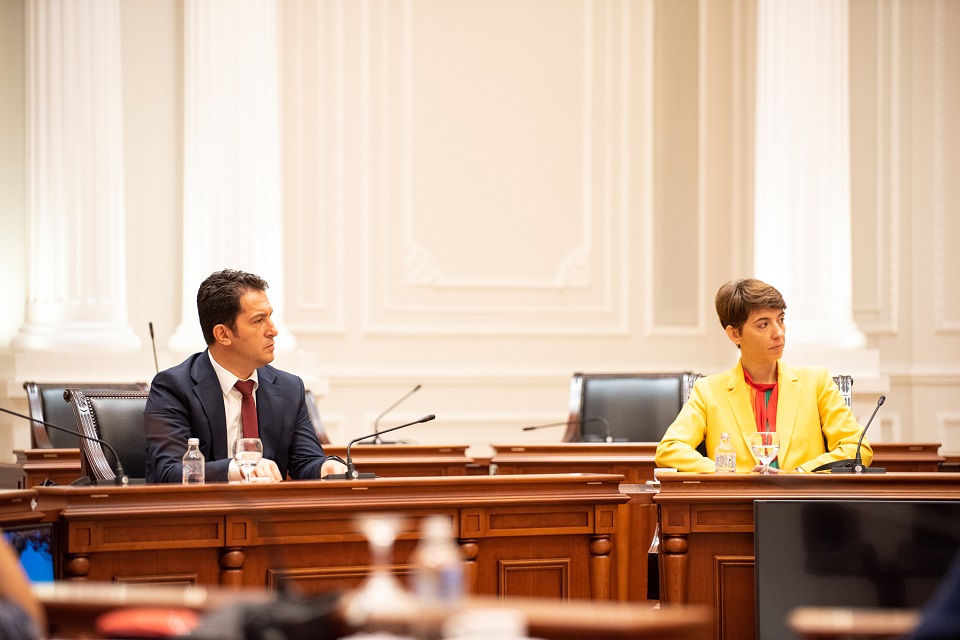
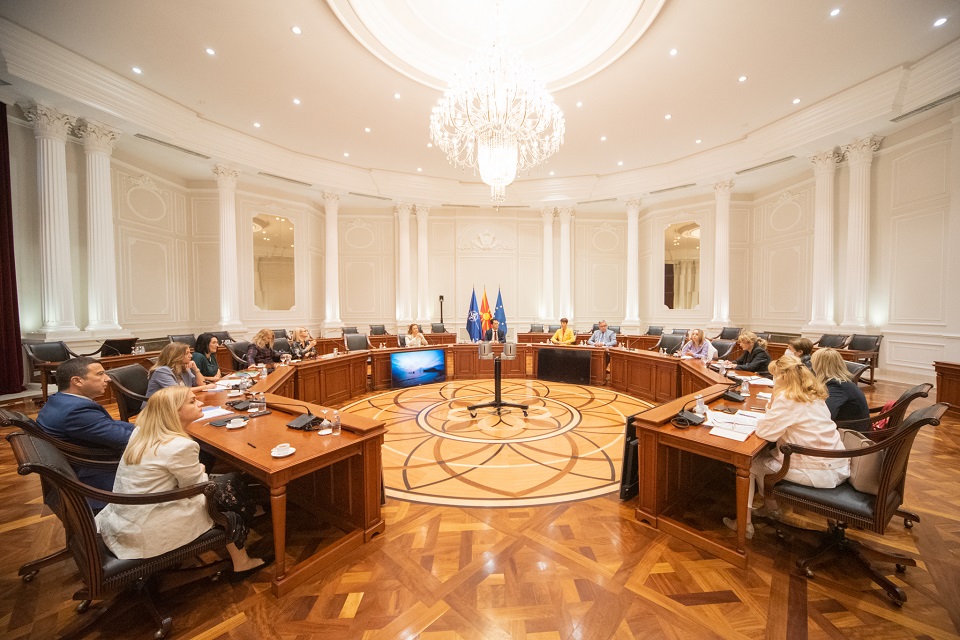
In the direction of implementing this programme objective, on 28 September at the Government of the RNM, a team from the HIFRNM, together with the Minister of Health, Dr Bekim Sali, attended an expert meeting and debate with the aim of reviewing certain observations and suggestions in relation to the Draft Rulebook on the manner and methodology for determining the “List of Medicines” that are borne by the Fund, which rulebook should be a good basis for quality implementation of the procedure for including medicines on the “Positive List”, as well as other procedures related to revising the “Positive List of Medicines”.
The Fund strongly supports all activities and measures for renewing the “List of Medicines” in the interest of the Fund’s insured persons.
What do you think about the proposals to reform the Fund - to establish an Assembly of Insured Persons instead of the Fund’s Management Board?
We have not received any prior information on this matter. I would like to emphasise that even in the current management structure of the Fund there are representatives who represent the insured persons. Namely, the Management Board consists of seven members appointed by the Government of the RNM for a period of four years. The Management Board is composed of one representative each proposed by: the Ministry of Health, the Ministry of Finance, the Federation of Trade Unions of Macedonia, the Chamber of Commerce, one representative from the Medical, Pharmaceutical and Dental Chambers, a representative from the Association of Pensioners and a representative of the insured persons proposed by the Consumers’ Association.
For a longer period, the need to increase capitation was emphasised as a serious problem, the amount of which has not changed since 2018. Can family doctors expect a positive response, and when?
An activity and cooperation with all competent institutions is under way for introducing a reform in the payment of health services in primary health care, more precisely the method of calculation and payment to selected doctors. The last increase in the capitation amount was in October 2019, with the increase of the capitation point from 55 to 63 denars (+14,55%).
In addition to actively analysing the needs and possibilities for increasing the capitation point, funds have been requested from the Ministry of Finance from the Budget Projection for 2023, and negotiations are under way to determine the HIFRNM Budget for 2023.
Will the implementation of preventive targets be removed during the health crisis?
Family doctors have emphasised that in conditions where there is a large number of people infected with Covid-19, healthy patients should not be mixed with sick patients, that is, conditions for achieving the targets cannot be provided, because the risk of spreading the virus increases.
Prevention is a key part of caring for the nation’s health, and the preventive targets are set precisely in that direction, to protect the health of citizens and to prevent various complications from delayed detection of diseases.
In addition, in the past period, the implementation of the preventive targets was halted on the basis of the Decision declaring a state of crisis due to Covid-19, the validity of which ended on 30.6.2022. To date, no such new Decision has been adopted.
Taking all this into account, the Fund has no basis for abolishing the preventive targets.