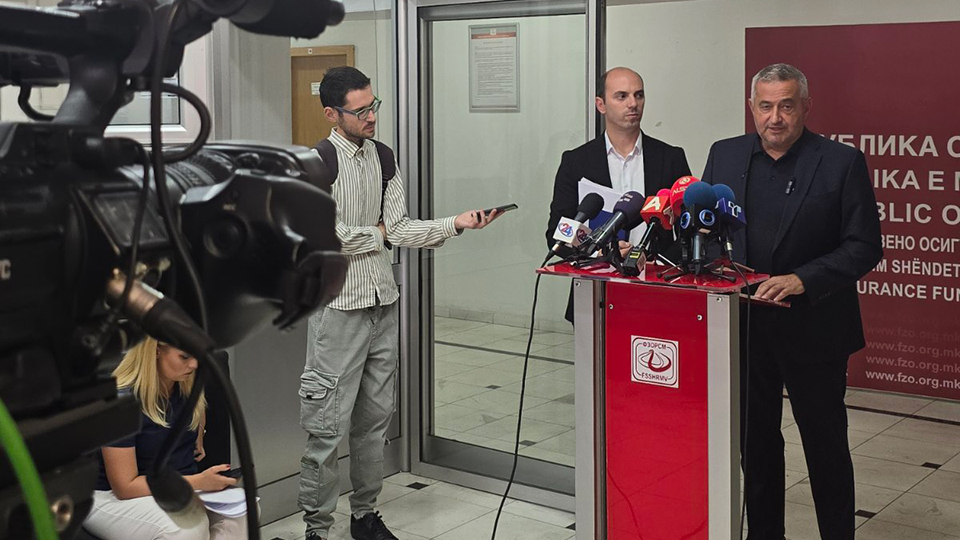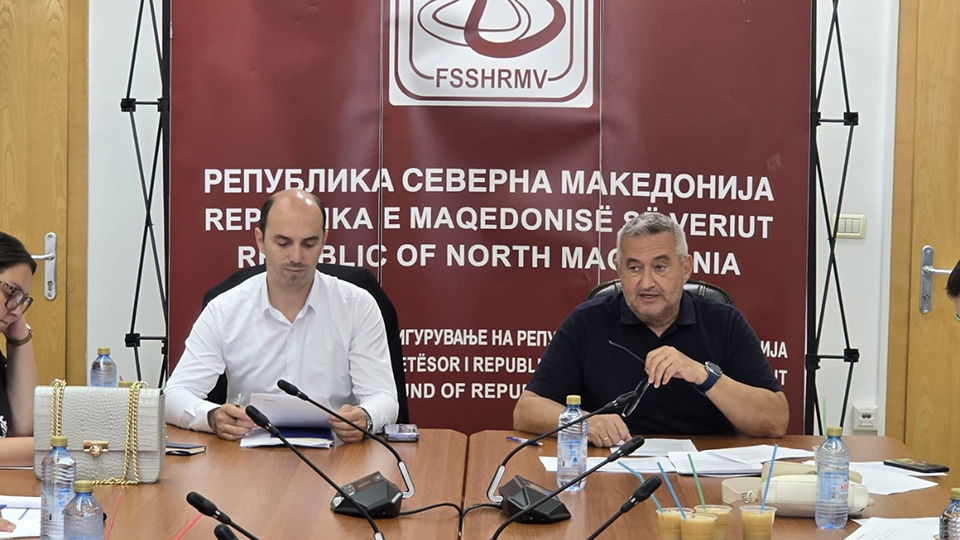
HIF includes new brands on the Positive List for pharmacies - greater availability and lower costs.

The Health Insurance Fund (HIF) informs the public that, as of June 2026, the group of medicines dispensed in private health institution pharmacies at the expense of the Fund includes 18 new medicine brands.
The new measure covers 16 brands for 10 generic medicines, which, in accordance with the applicable regulations, may be prescribed and dispensed on prescription at the expense of the Fund.
Of the total ten generic groups, nine are provided without co-payment, namely 15 medicines by protected name are available to insured persons without any additional financial burden.
The remaining three medicines, which were imported on an intervention basis in order to ensure continuity of supply following the discontinuation of production of the previously available medicines, have been reported with a minimum co-payment of approximately 60 denari, determined by the marketing authorisation holder. The detailed overview is provided in Annex 1.
This step was implemented at the request of manufacturers and marketing authorisation holders, thereby enabling the Fund to provide a broader choice of medicines, greater availability and lower costs for insured persons.
Lower reference prices
In five generic groups, the new brands have lower prices than the existing ones, resulting in a reduction in reference prices.
Among them is a second brand of the fixed combination beclometasone/formoterol (inhalation therapy for asthma and COPD), with the same composition and the same dosage, manufactured in a Member State of the European Union.
With the introduction of a competing brand in this therapeutic group, reference competition is established, whereby the reference price per package is reduced from 2.715 to 1.915 denari including VAT, and the new medicine is available without co-payment.
The reduction is not passed on to patients as an additional cost. On the contrary, a medicine without co-payment is available in the same therapeutic group, while the representative of the existing brand has announced a price reduction, which will also significantly reduce the co-payment for that medicine.
Applied to the same volume of supplied quantities from 2025 (57.441 prescriptions, with a value of 166,7 million denari), the new reference price will bring an estimated annual saving of 46 to 49 million denari, funds that will enable the introduction of the latest three-component medicine from the same therapeutic group. More detailed information is provided in Annex 2.
More medicines without co-payment
An insured person has the right to obtain a prescription medicine whose price is equal to the reference price determined by the Fund, without co-payment.
The Fund continuously works to expand the number of such medicines and welcomes every decision by manufacturers, marketing authorisation holders and the Ministry of Health that contributes to reducing prices and providing more medicines without co-payment or with a lower co-payment.
A co-payment is paid only for medicines from the same generic group whose price is higher than the reference price, whereby the difference is covered by the patient, in accordance with the principles of the reference system.
Quality, efficacy and safety remain the highest priority
All medicines placed on the market, including those on the Positive List, meet the same strict criteria for quality, efficacy and safety.
They are approved by the Agency for Medicines and Medical Devices (MALMED), after which the Ministry of Health determines their price.
Regardless of whether it is an original or generic medicine, the regulatory standards are identical, and every patient receives appropriate, effective and safe therapy.
Rational management according to international standards
In accordance with the recommendations and standards of the World Health Organization, the Fund promotes the use of generic medicines as a proven model for the rational use of public funds, without compromising the quality of treatment.
In conditions of increased health needs and limited budgetary resources, this approach enables greater availability of therapy and more efficient use of funds, with the patient at the centre of the health system.
This is also evidenced by 27,3 million realised prescriptions (an average of 15 per insured person) and 3,6 billion denari spent on prescription medicines during 2025.
The Fund remains committed to its strategic objective - ensuring more accessible therapy, more efficient use of public funds and the advancement of health care for every insured person. In this direction, a new expansion of Positive List A will follow soon.