Joint press conference - PHI University Clinic for Radiotherapy and Oncology (UCRO) and the Health Insurance Fund of Macedonia
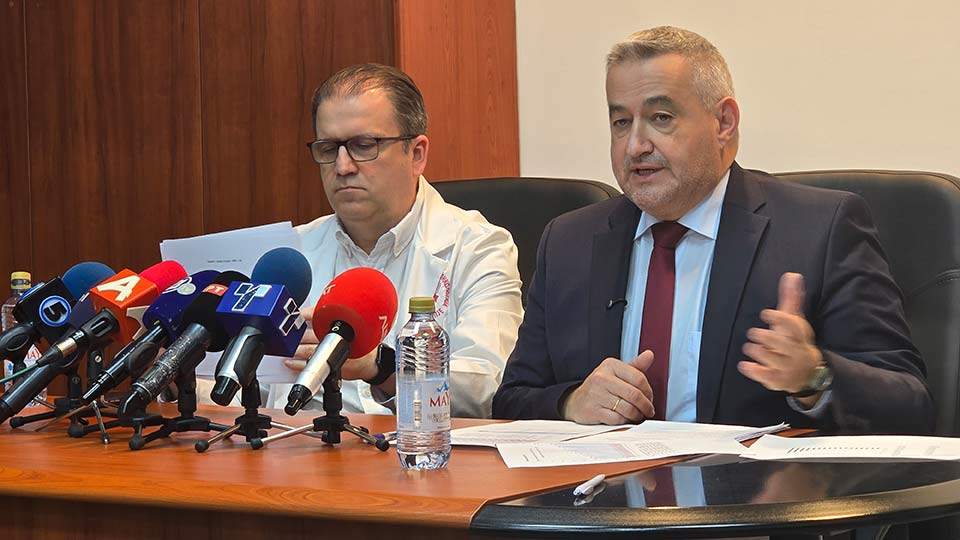
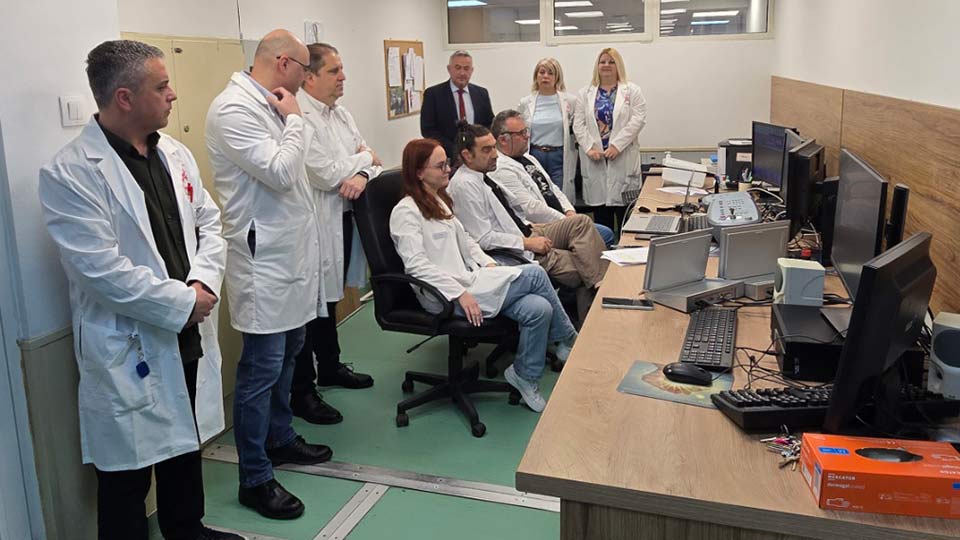
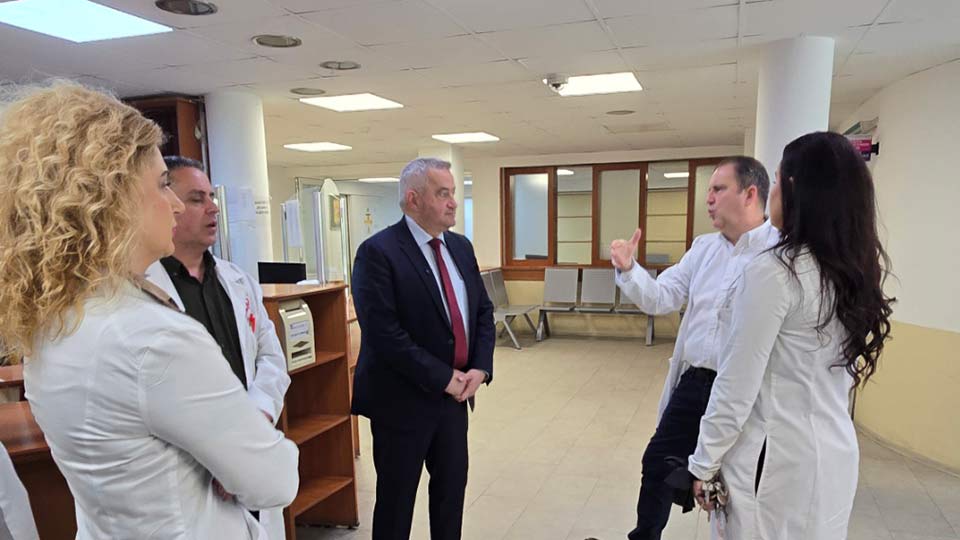
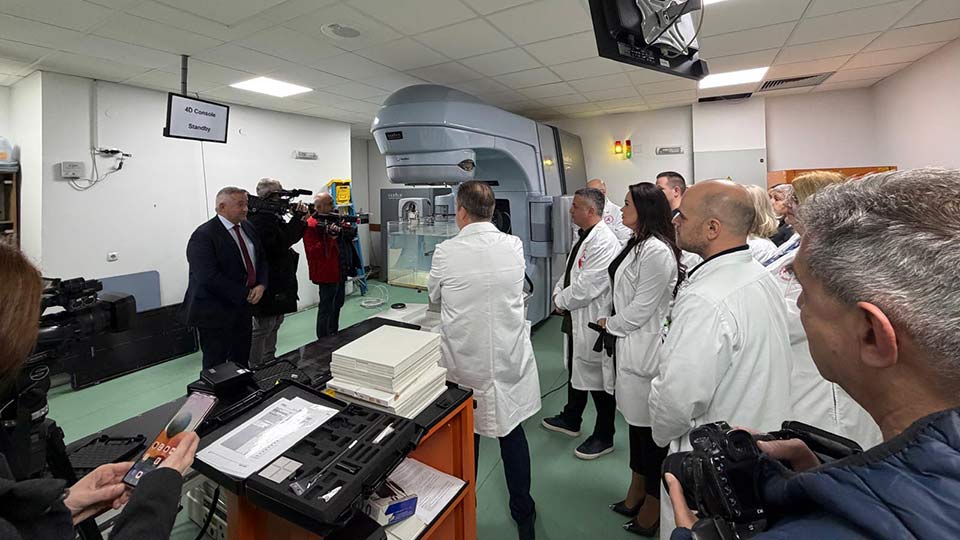
Today, 4 April 2026 (Saturday), starting at 11:30, a joint press conference was held on the premises of the PHI University Clinic for Radiotherapy and Oncology, at which the results, investments and future plans for improving the treatment of oncology patients were presented.
The following key topics were covered at the press conference:
- Data and results – overview of the incidence (number of new cases) and prevalence (total number of existing cases) of malignant diseases (breast cancer, lung cancer and melanoma), as well as the results achieved in treatment;
- Financial investments – the Clinic’s budget for 2026 and the planned improvements;
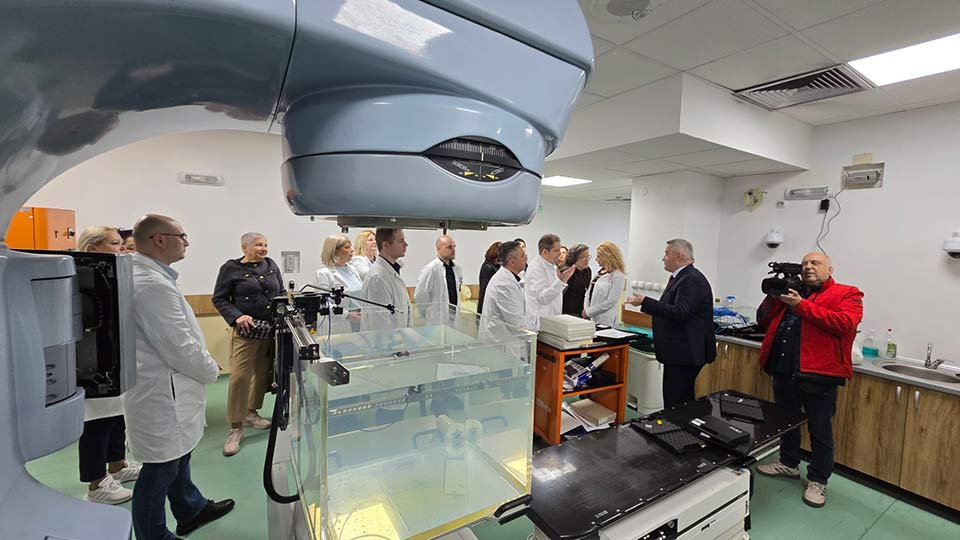
- New method – introduction of modern stereotactic radiotherapy, as a highly precise technique for the treatment of specific brain lesions.
In recent years, although the number of newly diagnosed cases (incidence) has remained relatively stable, the total number of patients (prevalence) has recorded continuous growth. This trend is the result of increased life expectancy and the significant improvement of treatments, which is directly linked to increased investment per patient and the introduction of modern therapies (immunotherapy, targeted therapy, etc.).
Breast cancer (C50)
- Prevalence: from 5.072 patients in 2020 to 7.038 in 2025 (growth of 38,8 %);
- New cases: between 800 and 1.000 annually;
- Investment per patient: from 42.586 denars (694 euros) in 2020 to 155.582 denars (2.538 euros) in 2025 (increase of 265 % or 3,65 times);
- Average survival: around 7 years (estimate based on the prevalence/incidence ratio).
Lung cancer (C34)
- Prevalence: from 1.265 patients in 2020 to 1.743 in 2025 (growth of 37,8 %);
- New cases: between 600 and 700 annually;
- Investment per patient: from 14.378 denars (234 euros) in 2020 to 470.441 denars (7.668 euros) in 2025 (increase of 3.172 % or 32,7 times);
- Immunotherapy coverage: increased from 11,1 % in 2021 to 48,5 % in 2025;
- Average survival: over 2 years.
Melanoma (C43)
- Prevalence: from 237 patients in 2020 to 514 in 2025 (growth of 116,9 %);
- New cases: from 63 in 2020 to 174 in 2025 (growth of 176 %);
- Investment per patient: from 129.485 denars (2.112 euros) in 2020 to 1.059.413 denars (17.282 euros) in 2025 (increase of 718 % or 8,18 times);
- Average survival: around 3 years.
The analyses show a clear and strong link between investment per patient and the total number of patients living longer, particularly in breast and lung cancer, and most markedly in melanoma.
An increasing number of patients are living longer and with a better quality of life, with certain malignant diseases gradually being transformed into chronic conditions.
Financial investments in UCRO
In the period from 2010 to 2020, the UCRO budget ranged between 8 and 12 million euros.
The budget for 2026 amounts to around 3,5 billion denars, or approximately 57 million euros, which represents:
- an increase of 15,5 % compared with 2025 and
- a significant increase of 73,6 % compared with 2023.
In addition, for 2026 an increase in the oncology medicines budget is envisaged by 14,38 % compared with the previous year.
New developments in therapy
- Introduction of two new medicines for breast cancer with PIK3CA mutation;
- Increase in coverage with CDK 4/6 inhibitors by around 50 %;
- Introduction of a new-generation therapy (ARI) for prostate cancer with increased coverage of around 80 %;
- Increase in immunotherapy coverage by around 10 %.
In 2025, six new medicines were introduced for the first time (ipilimumab, avelumab, durvalumab, dabrafenib, trametinib and darolutamide), and with the two additional medicines in 2026, the total number of newly introduced therapies reaches eight over a period of two years.
New method
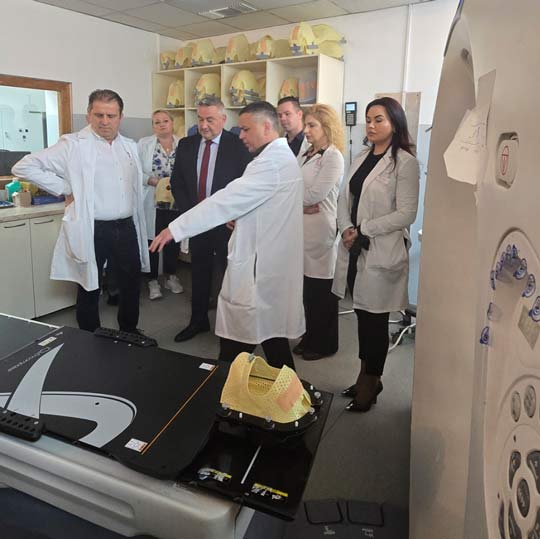
As part of improving treatment, modern stereotactic radiotherapyhas been introduced as a highly precise technique for the treatment of specific brain lesions, enabling better clinical outcomes and a significant improvement in patients’ quality of life.
These activities form part of the comprehensive approach to improving oncology care, with a focus not only on treatment, but also on early diagnosis, genetic research, prevention and timely detection of diseases.
Respectfully,
PHI University Clinic for Radiotherapy and Oncology
Health Insurance Fund of Macedonia