Announcement for the media
ANNOUNCEMENT FOR THE MEDIA
The Health Insurance Fund with significant results in the first year of the mandate of the new management: Better medicines, better salaries, better health services
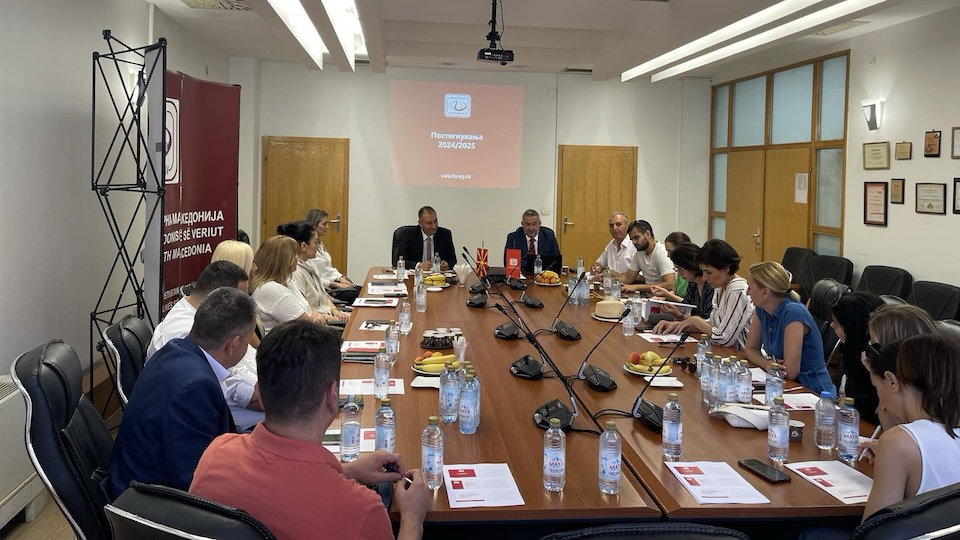
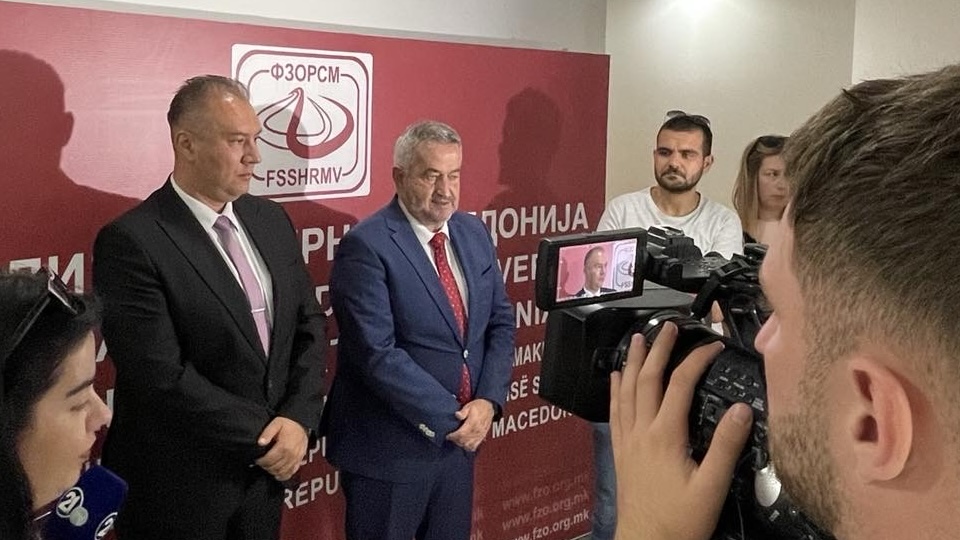
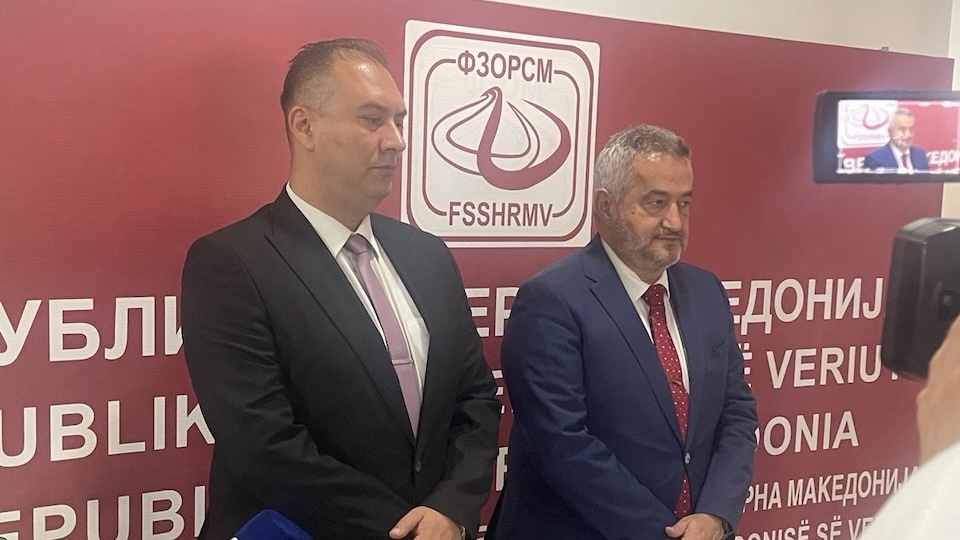
At today’s briefing with the media, the Directors General of the Health Insurance Fund of the Republic of North Macedonia, Mr Sasho Klekovski and Mr Branko Adzhigogov, presented an extensive overview of the reforms and results achieved in the first year since their appointment. A vision was presented for transforming the Fund into an efficient, transparent and proactive pillar of the health system, with a focus on insured persons and health workers.
Main priorities:
- Improving access to medicines;
- Better financing of primary health care and specialist-consultative services (SKZZ);
- More and higher-quality services in public health institutions;
- Greater effectiveness and digital transformation of the Fund.
A historic step forward in access to medicines
Numerous Macedonian families continue to face a high financial burden due to medicines, with as much as 65% of costs covered directly out of pocket. The Fund responded by revitalising the Positive List of Medicines, which, after more than ten years of stagnation, was expanded on two occasions:
- In August 2024, 9 generic medicines were added for the treatment of:
- blood diseases (Prasugrel, Ticagrelor),
- cardiovascular diseases (Nebivolol, Perindopril, Valsartan, Fenofibrate),
- mental health and dementia (Escitalopram, Memantine, Duloxetine);
- In July 2025, two new medicines for oncology treatment were added: letrozole and anastrazole (aromatase inhibitors).
Through participation in the national medicines platform and the introduction of the E-prescription, processes are being accelerated, costs are being reduced and continuous access to treatment is being ensured.
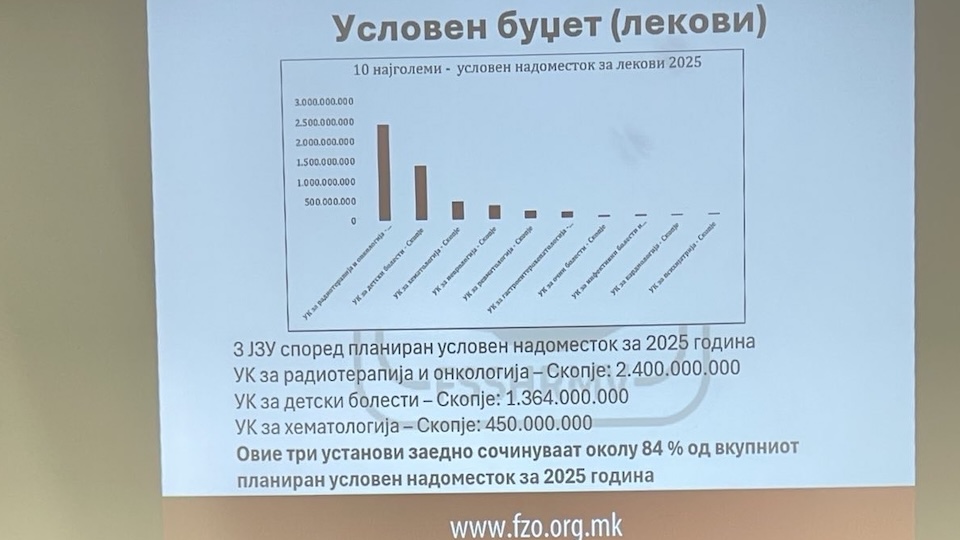
Conditional budget for medicines: broader coverage, better quality
The new budgeting model enabled:
- stable access to medicines for oncology, haematology, cystic fibrosis, multiple sclerosis, autoimmune diseases (rheumatological, dermatological, gastroenterological);
- elimination of waiting lists for growth hormone;
- expansion of biological therapy also in regional institutions - example: Struga.
More and better services in PHIs
Through increased financing, the Fund significantly improved the capacity of public health institutions:
- Salary increases: the lowest net basic salary now amounts to 27.000 MKD (compared with 18.000 MKD in 2022), and the average salary has reached 53.983 MKD. Real growth is 9.4% for 2024/25, several times higher than in the previous period (3.8% for 2021–2023).
- Reconstructions of health institutions:
- Clinic for Infectious Diseases,
- Clinic for Gynaecology and Obstetrics,
- Clinic for Children’s Diseases,
- Institute of Public Health,
- as well as additional projects in procedure or in the implementation phase.
- Procurement of modern equipment and introduction of new methods in:
- Digestive surgery,
- Bariatric surgery,
- Living donor liver transplantation,
- Urology, kidney transplants, prosthesis implantation, radiology, thrombectomy, peripheral stenting,
- thoracic and plastic surgery, breast reconstruction, ENT, voice prostheses,
- TAVI, 3D mapping, cryoablations, implantable cardioverter defibrillator.
Other new and expanded services
The Fund also invested in new areas:
- Financing of health services for prisoners;
- Support for ophthalmology, cardiac surgery, spa treatment, orthopaedic aids, treatment abroad;
- Improvement of procedures for in vitro - the decision-making time has been reduced from 3 months to 2 weeks;
- Simplified administration, digitalisation of processes, rationalisation of procedures for sick leave and an increased number of control mechanisms.
Greater effectiveness and institutional maturity of the HIF
- Intensive digitalisation of internal processes;
- Improved interoperability with other institutions (MSPDM, PRO, CRM);
- Enhanced information security standards;
- Improved working conditions and salaries for the Fund’s employees.
These results represent a clear indicator of continuous, fully oriented and responsible reform of the health system, supported by transparency, systematic analyses and listening to the needs of citizens and health workers.
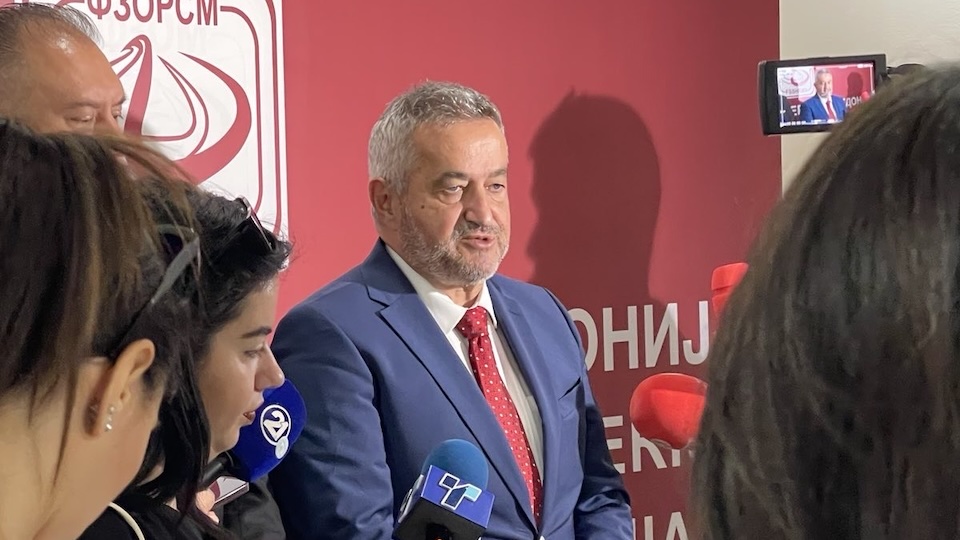
After the briefing, the directors remained available for on-camera statements. For all media that were unable to attend, the Fund remains open for additional information.